
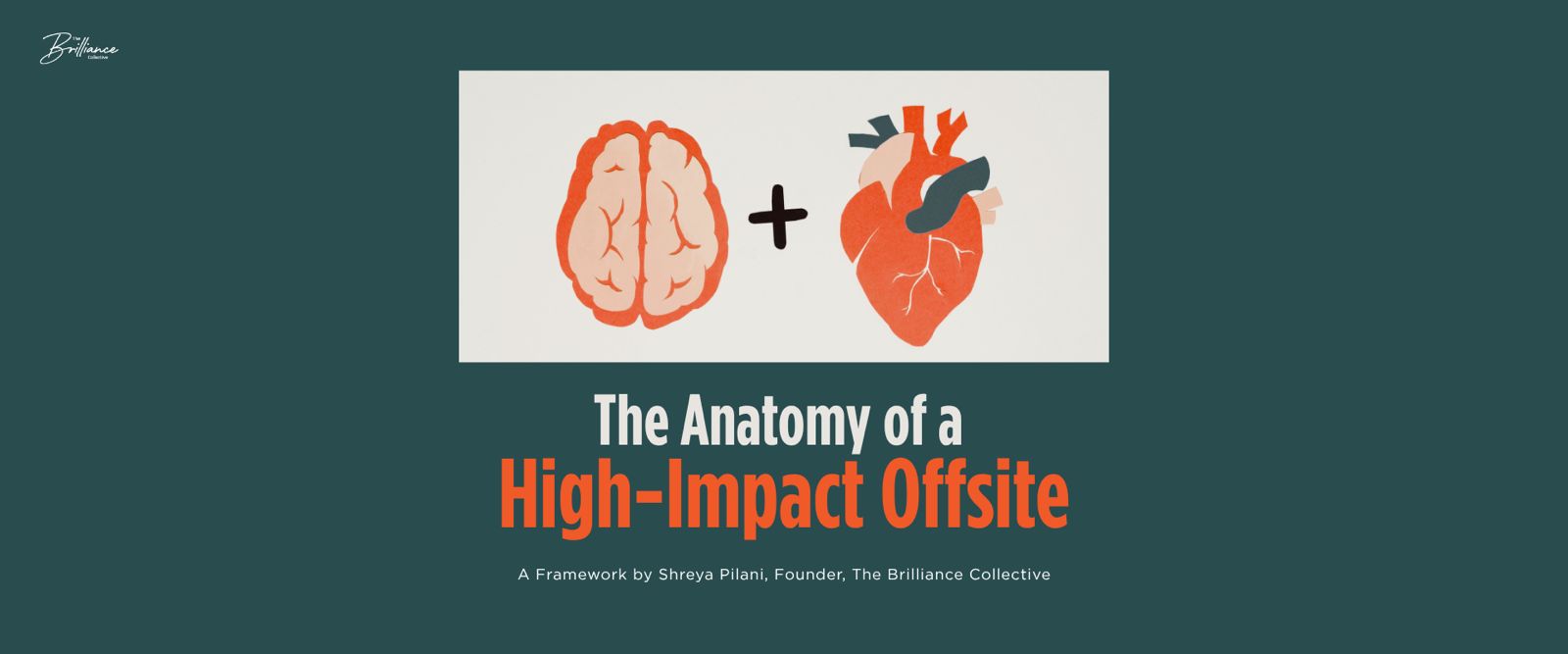
Most leadership off-sites are planned around logistics.
A good location. A packed agenda. A few presentations. Maybe a motivational speaker. Maybe entertainment in the evening.
But the most impactful offsites are not remembered because of where they happened.
They are remembered because something shifted in the room.
A new clarity emerged. A difficult truth was finally spoken. A team aligned around a future they could suddenly see more clearly.
Here’s how to do it right:
1. Reflections
Most leadership teams spend the year operating at speed.
Quarterly reviews become performance summaries. Meetings become updates. Teams get so focused on execution that they rarely stop to examine the deeper story underneath the numbers.
A great offsite creates space for honest reflection.
Not just:
- What succeeded
- What failed
- What targets were hit
But:
- What patterns emerged
- What assumptions proved wrong
- What the organisation learned about itself
The most valuable conversations are often the uncomfortable ones. The product launch that revealed internal silos. The campaign that succeeded for unexpected reasons. The talent challenge nobody openly discussed.
Leadership teams cannot move forward strategically if they are still operating from incomplete narratives.
2. Expansion
Many offsites spend too much time looking backwards. But strong leadership teams are built by their ability to anticipate what comes next.
A meaningful offsite asks bigger questions:
- What will our industry look like in three years?
- What capabilities will matter most?
- What shifts are already changing customer behaviour?
- Which assumptions about our business may no longer hold true?
The goal is not prediction. It is preparedness.
This is where leadership teams move from operational thinking to strategic thinking.
The conversation shifts from: “How did we perform?” to: “What kind of organisation do we need to become?”
And in today’s environment, where technology, culture, consumer behaviour, and talent expectations are changing simultaneously, this shift matters more than ever.
3. Perspectives
One of the biggest risks for any leadership team is internal echo chambers. The longer teams work together, the easier it becomes to reinforce existing assumptions instead of challenging them.
That is why the best offsites bring in external voices.
Not simply for inspiration. But for perspective.
The right experts can help teams:
- Understand changing markets
- Decode cultural and consumer shifts
- Explore emerging leadership skills
- Anticipate economic and workplace transformation
- Challenge legacy ways of thinking
- And much more.
Sometimes, the most valuable thing an outsider brings into a room is language for something leaders have sensed but not yet articulated.
External perspectives create productive tension. And productive tension is often where strategic breakthroughs begin.
4. Practice
Many offsites generate ideas. Far fewer change behaviour. This is where workshops matter.
Not performative team-building exercises, but hands-on experiences that allow leaders to practice:
- Decision-making
- Communication
- Strategic thinking
- Storytelling
- Conflict navigation
- Adaptability
- Cross-functional collaboration
Insight without application fades quickly.
But when leaders actively engage with new ways of thinking inside the room, they are more likely to carry those behaviours back into the organisation.
A great offsite does not end with inspiration. It builds capability.
5. Release
This is often misunderstood. Entertainment is not the “light segment” added after the serious work is complete. It plays a deeper role.
Leadership teams spend most of the year under pressure:
- making decisions
- managing uncertainty
- navigating performance expectations
Shared moments of release create openness.
Whether it is music, storytelling, humour, or a shared experience, these moments build something organisations rarely prioritise enough: trust.
And trust changes the quality of conversation. People speak more honestly. Listen more openly. Collaborate more freely.
That emotional shift is not separate from strategy. It is part of it.
The Best Offsites Change The Room
A great leadership offsite is not measured by how full the agenda was. It is measured by what changed afterwards.
Did the team leave with greater clarity?
Did conversations become more honest?
Did leaders start thinking differently?
Did the organisation become more aligned around the future?
Because ultimately, the best offsites do not just inform leaders.
They change how leaders think, speak, and lead.